Effective Eczema and Psoriasis Treatment in Malaysia

Eczema and psoriasis treatment helps reduce itching, redness, dryness, scaling, inflammation and recurring flare ups through proper skin diagnosis and personalised medical care. At Dr. Ko Skin Specialist, treatment may include topical medication, oral medication, allergy test, supplements or immunotherapy, depending on your skin condition, severity and treatment response. 

What Is Eczema?

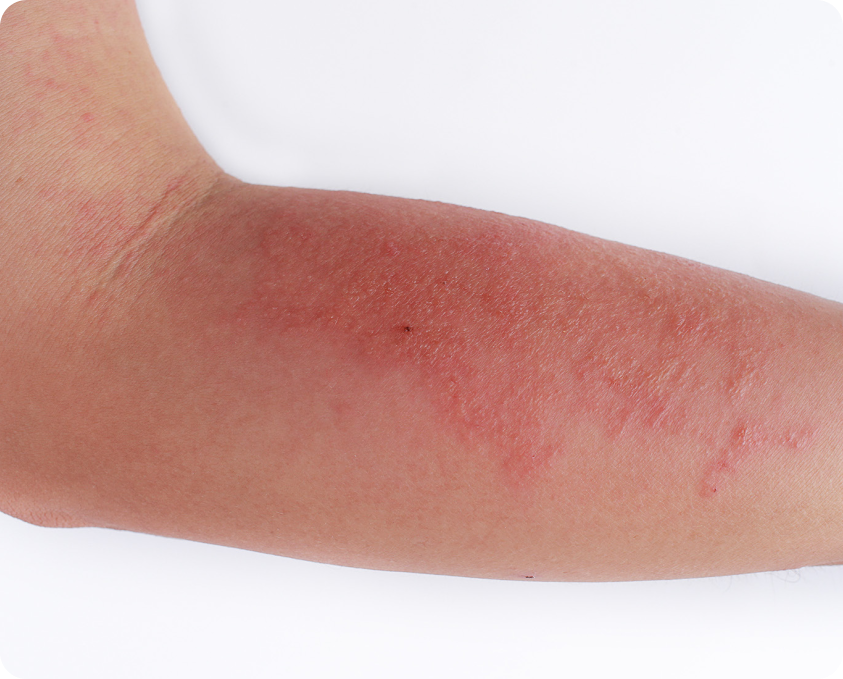
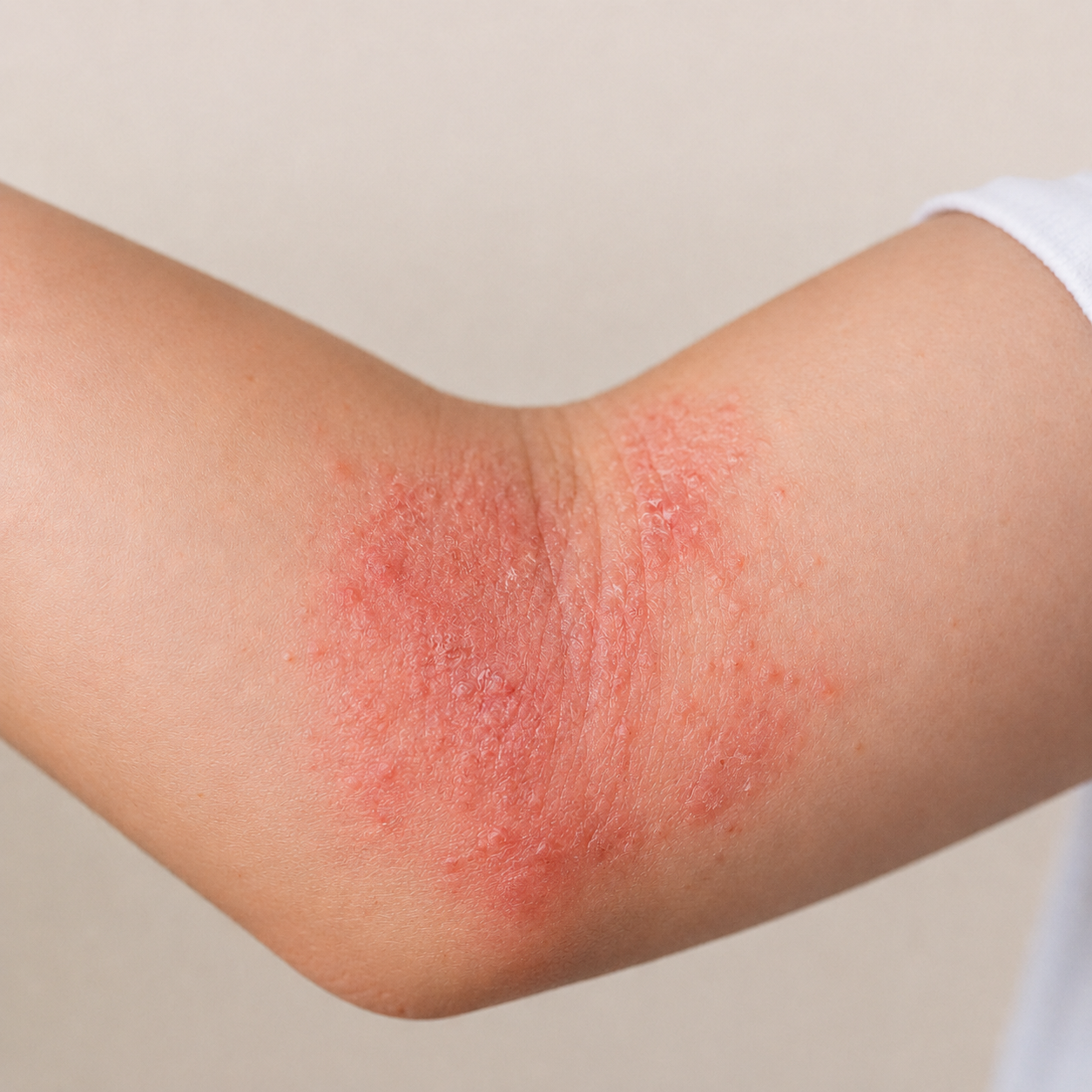
Eczema is a chronic inflammatory skin condition that causes dry, itchy, red and irritated skin. It usually happens when the skin barrier is weak or sensitive, making the skin more easily affected by triggers such as sweat, dust, fragrance, detergent, weather changes, stress or unsuitable skincare products. 

Eczema is also commonly known as atopic dermatitis, especially when referring to one of the most common types of eczema. In Malaysia, eczema is a common concern among children. According to Dermatological Society of Malaysia, over 20% of Malaysian children are affected by eczema or atopic dermatitis. 

Eczema can appear on different parts of the body, including the face, neck, hands, arms, legs, behind the knees and inside the elbows. Some patients may only experience mild dryness and itching, while others may have repeated flare ups, cracked skin, oozing, crusting or infection due to frequent scratching. 

The main goal of eczema treatment is to calm inflammation, reduce itching, repair the skin barrier, prevent infection and lower the chance of recurring flare ups. 

What Is Psoriasis?

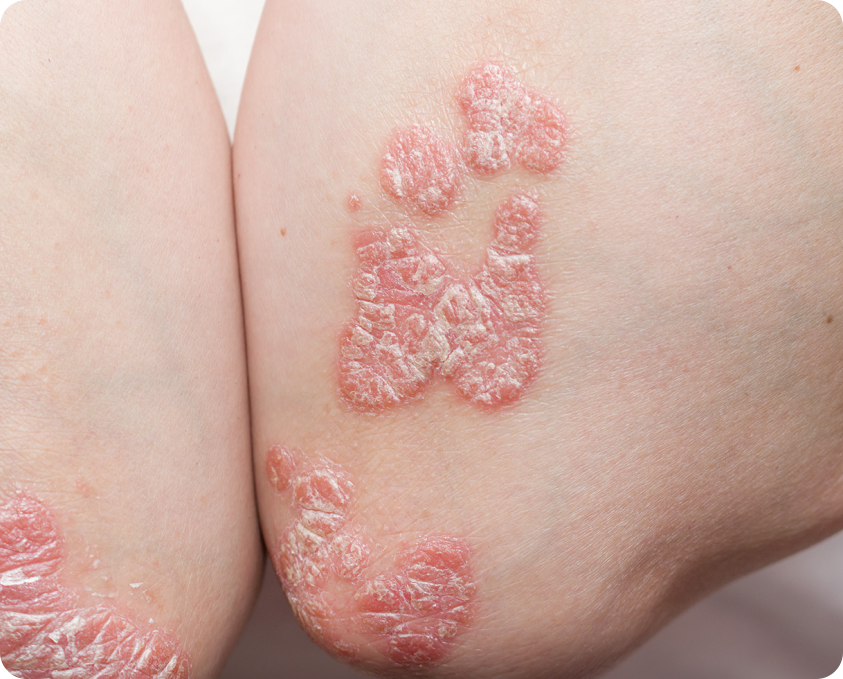
Psoriasis is a chronic immune-related skin condition that causes skin cells to grow faster than normal, leading to thick, raised and red patches covered with white or silvery scales. These patches are often known as plaques and may feel itchy, sore or uncomfortable. 

Psoriasis is not contagious and is not caused by poor hygiene. According to Focus Malaysia, psoriasis affects about 0.34% of the Malaysian population. 

Psoriasis commonly appears on the scalp, elbows, knees, lower back, palms, soles and nails. It may also affect more than the skin, as some patients can develop joint pain, stiffness or swelling, which may be related to psoriatic arthritis. 

The main goal of psoriasis treatment is to reduce inflammation, slow down excessive skin cell growth, clear scales, relieve discomfort and manage recurring flare ups. 

What Is the Difference Between Eczema and Psoriasis?

Eczema is commonly linked to skin barrier weakness and sensitivity, while psoriasis is linked to an overactive immune response that speeds up skin cell growth. Eczema usually feels intensely itchy and inflamed, while psoriasis often appears as thicker raised patches with white or silvery scales. 

Comparison Eczema Psoriasis
Main appearance Red, dry, rough, itchy or inflamed patches Thick, raised, red plaques with white or silvery scales
Common feeling Intense itching, sensitivity, stinging or irritation Itching, burning, soreness or tightness
Common areas Face, neck, hands, arms, behind knees, inside elbows Scalp, elbows, knees, lower back, nails, palms, soles
Common triggers Harsh soaps, detergents, sweat, allergens, dust, fragrance, weather and stress Stress, infection, skin injury, weather changes, smoking, alcohol and certain medication
Main treatment goal Repair the skin barrier, calm inflammation and reduce itching Slow down excessive skin cell growth, reduce inflammation and clear scales
Is it contagious No No

What Are the Symptoms of Eczema?

Eczema symptoms usually include dry skin, redness, itching, rough patches, sensitivity and recurring rashes. In more serious flare ups, the skin may crack, ooze, crust, bleed or become infected due to repeated scratching. Symptoms may improve and return depending on triggers and skin condition. 

Common eczema symptoms include: 

  • Dry, rough or flaky skin 
  • Red or inflamed patches 
  • Intense itching, especially at night 
  • Sensitive skin that reacts easily to products or weather 
  • Small bumps, rashes or blisters 
  • Cracked, crusted or oozing skin 
  • Skin thickening caused by repeated scratching 
  • Burning or stinging after using unsuitable skincare 
  • Repeated flare ups on the same body areas 

Eczema can happen to children, teenagers and adults. Some patients only experience mild dryness, while others may suffer from persistent itching, sleep disturbance, infection or skin discomfort that affects daily life. 

What Are the Symptoms of Psoriasis?

Psoriasis symptoms usually include thick, raised skin plaques, white or silvery scales, dryness, cracking, itching, burning and sometimes nail or joint changes. The patches may appear in small areas or spread across larger parts of the body depending on the severity. 

Common psoriasis symptoms include: 

  • Raised red patches covered with white or silvery scales 
  • Dry, cracked skin that may bleed 
  • Itching, burning or soreness 
  • Thick scales on the scalp that may look like severe dandruff 
  • Thickened, pitted, lifted or discoloured nails 
  • Plaques on the elbows, knees, lower back, palms or soles 
  • Recurring flare ups that improve and return over time 
  • Joint pain, stiffness or swelling in some patients 

Psoriasis is not contagious. You cannot get psoriasis from touching another person, sharing personal items or being near someone with the condition. 


What Are the Common Types of Eczema?

Atopic Dermatitis

Atopic dermatitis is one of the most common forms of eczema. It often causes dry, itchy and inflamed skin and may be linked to a personal or family history of allergy, asthma or hay fever.
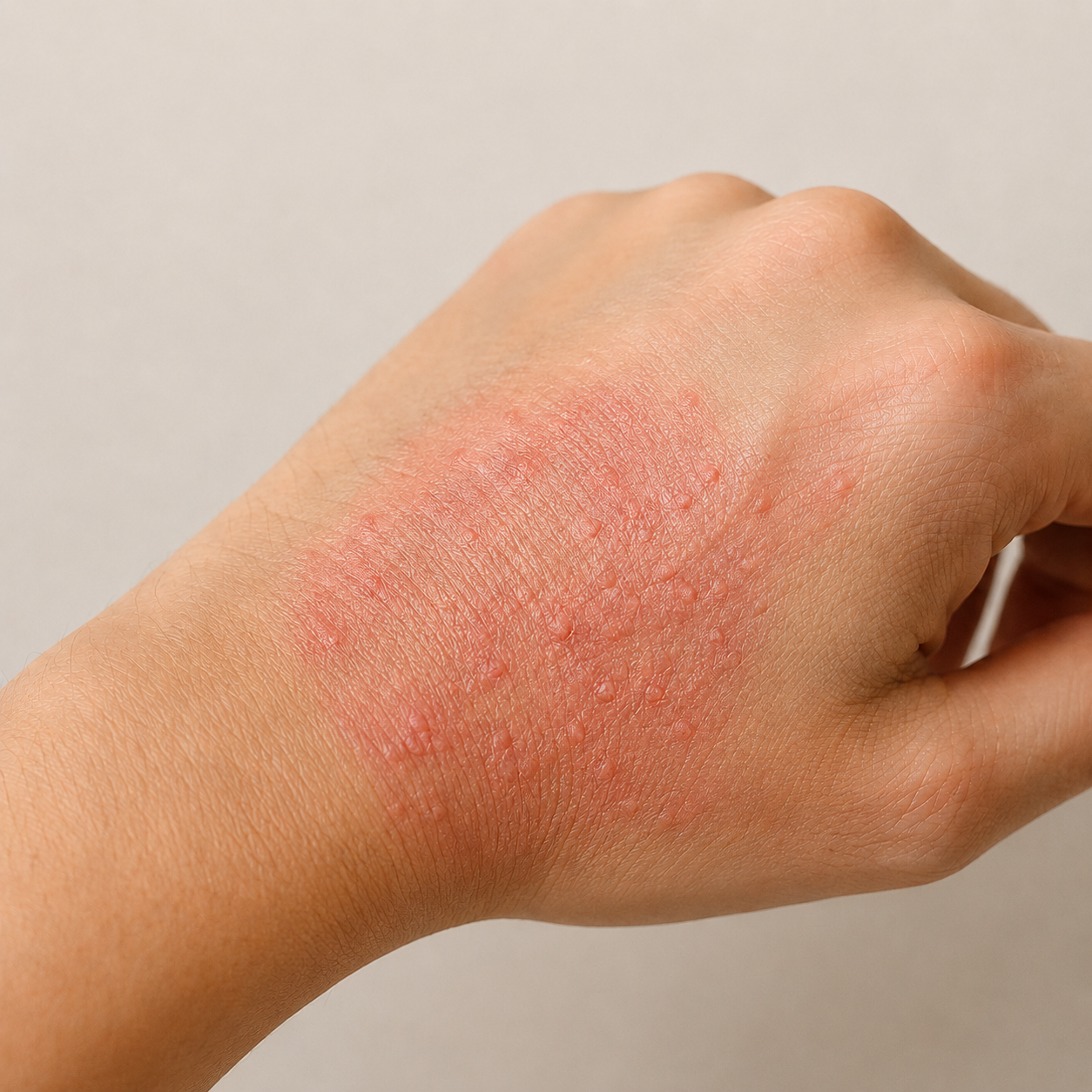
Contact Dermatitis

Contact dermatitis happens when the skin reacts to an irritant or allergen. Common triggers include soaps, detergents, fragrance, skincare products, hair dye, metal, gloves or workplace chemicals.
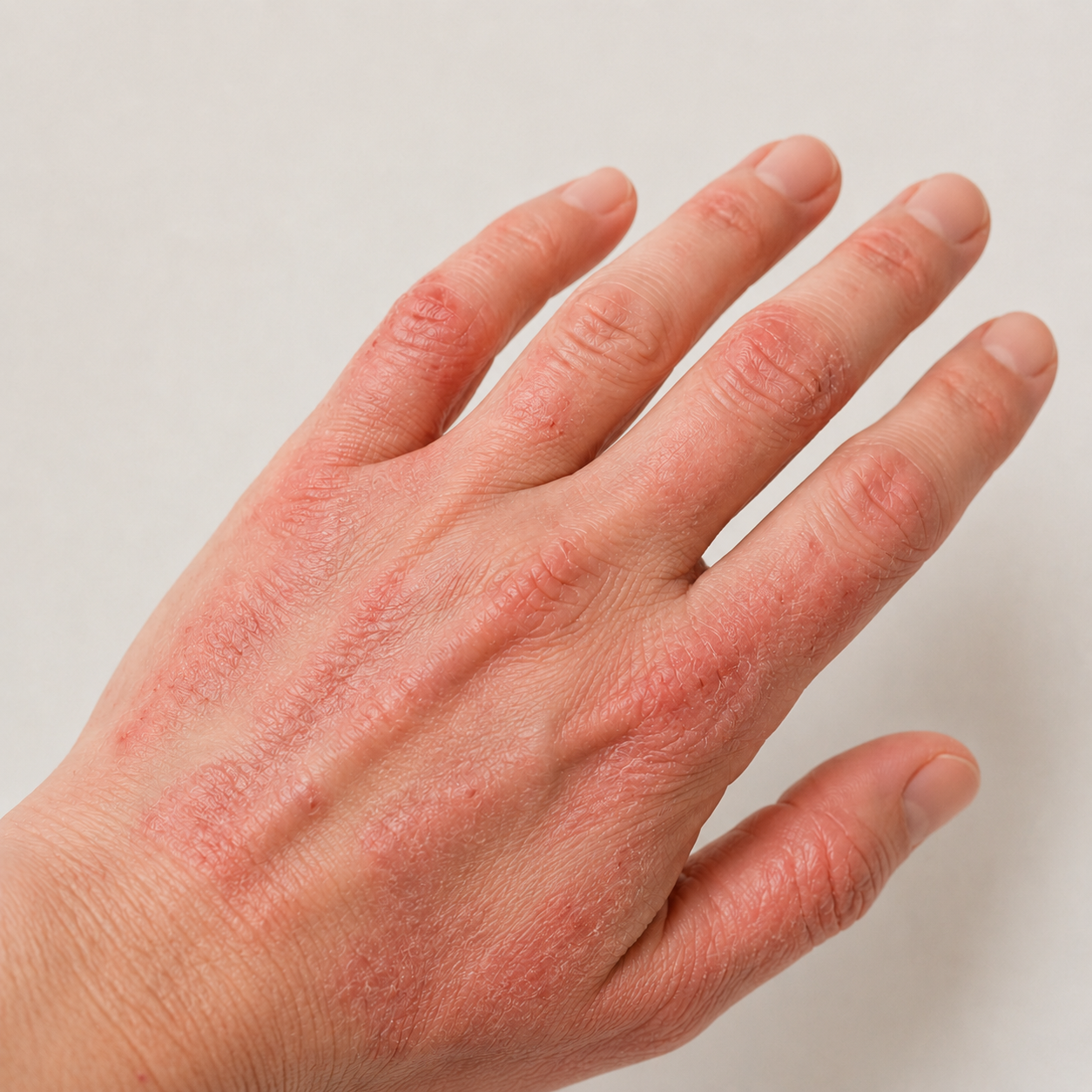
Hand Eczema

Hand eczema affects the hands and fingers. It is common among people who frequently wash their hands, use cleaning chemicals or work in environments where the skin is exposed to irritants.
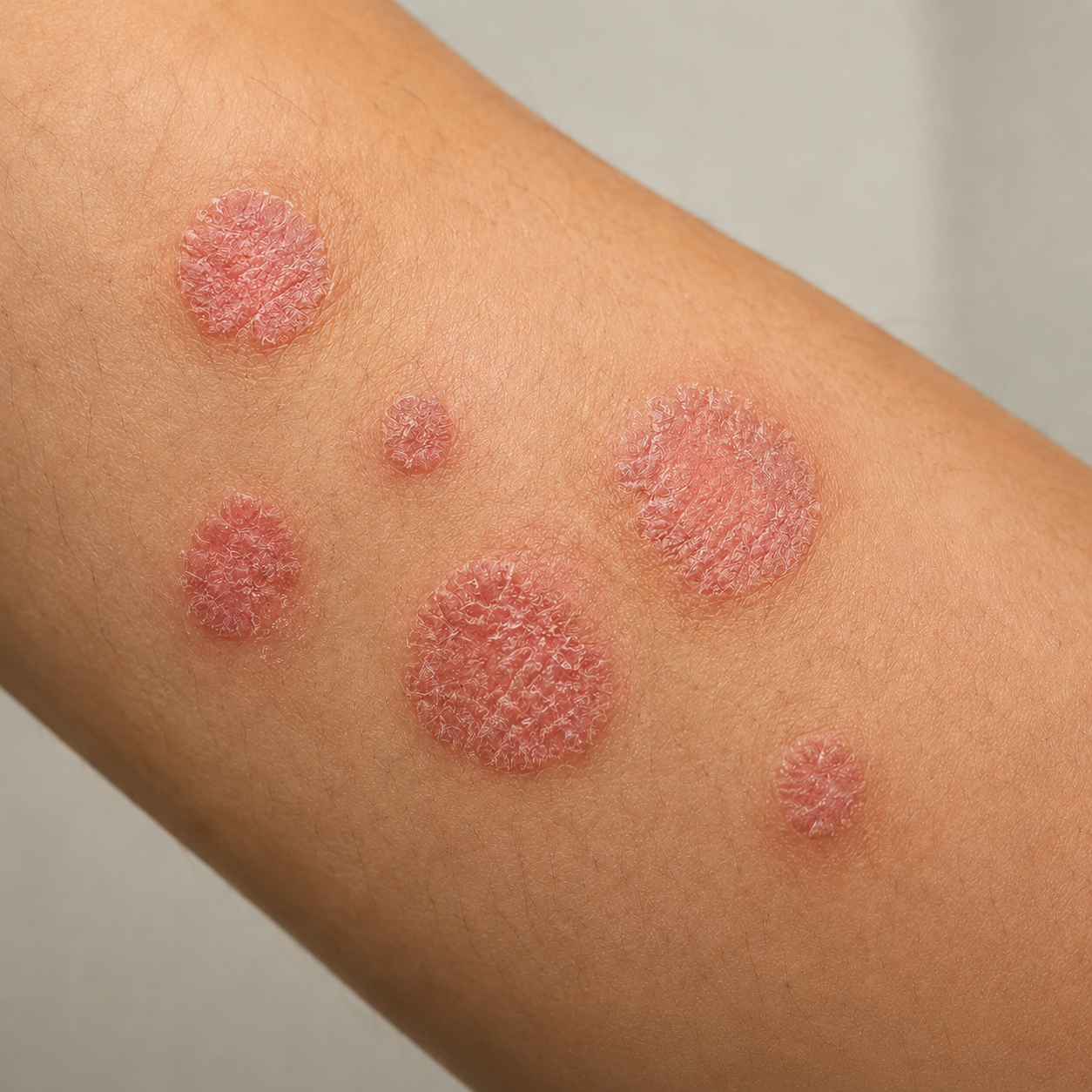
Nummular Eczema

Nummular eczema appears as round or coin shaped patches of irritated skin. These patches may be itchy, dry, scaly or inflamed.
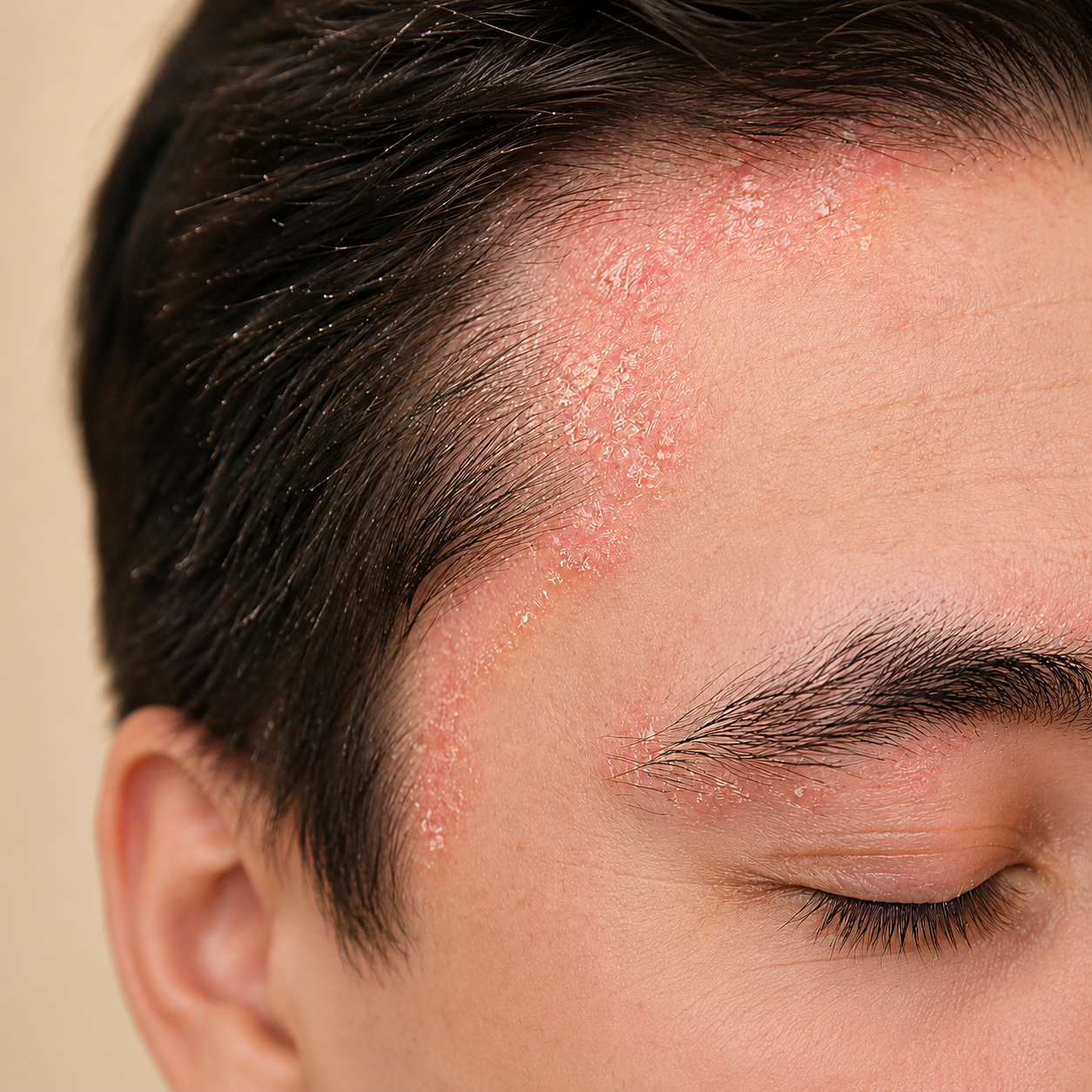
Seborrhoeic Dermatitis

Seborrhoeic dermatitis commonly affects oily areas such as the scalp, face and chest. It may cause redness, flakes and irritation and can sometimes be confused with scalp psoriasis.
What Are the Common Types of Eczema?

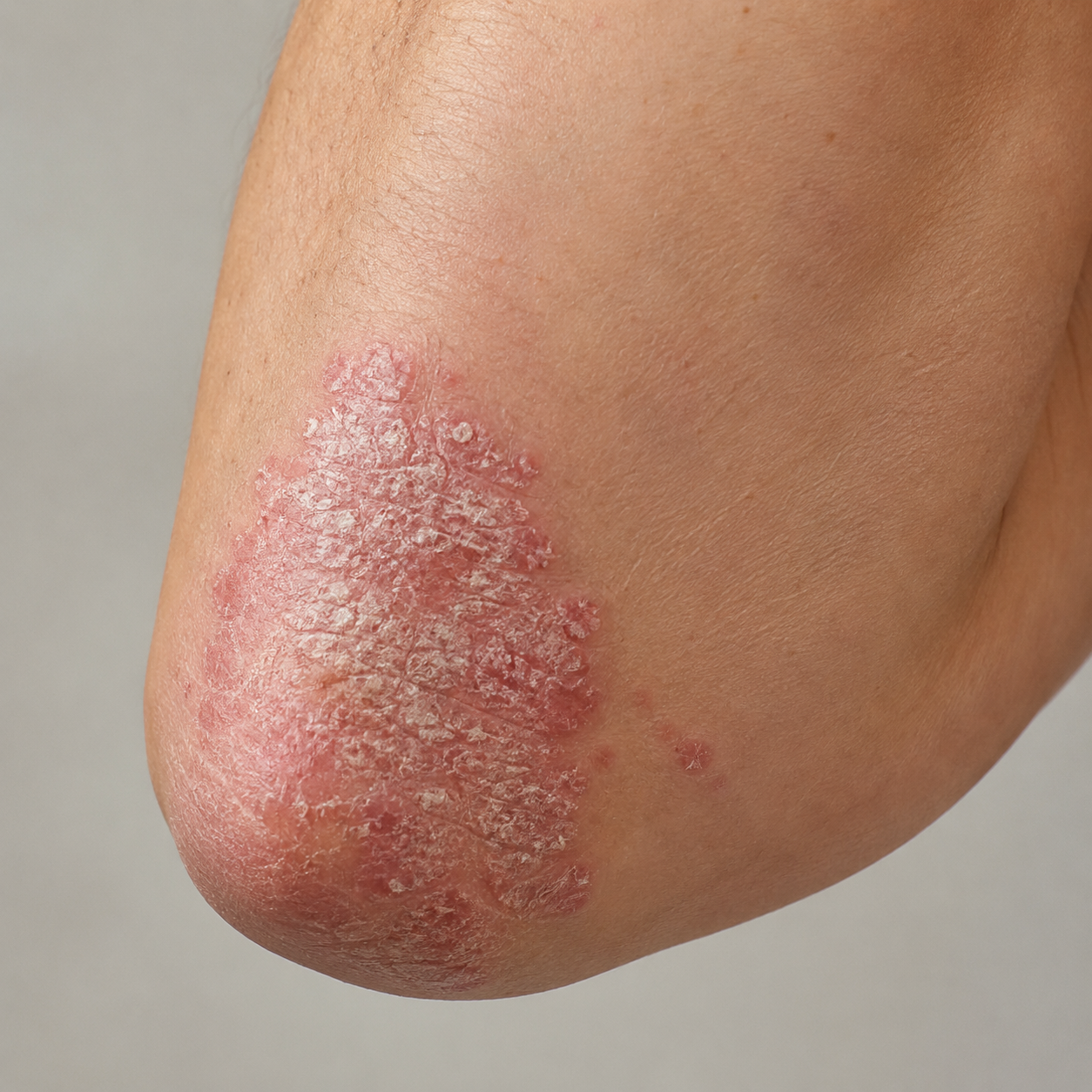
Plaque Psoriasis

Plaque psoriasis is the most common type of psoriasis. It causes raised, red and scaly patches, often on the elbows, knees, scalp and lower back.
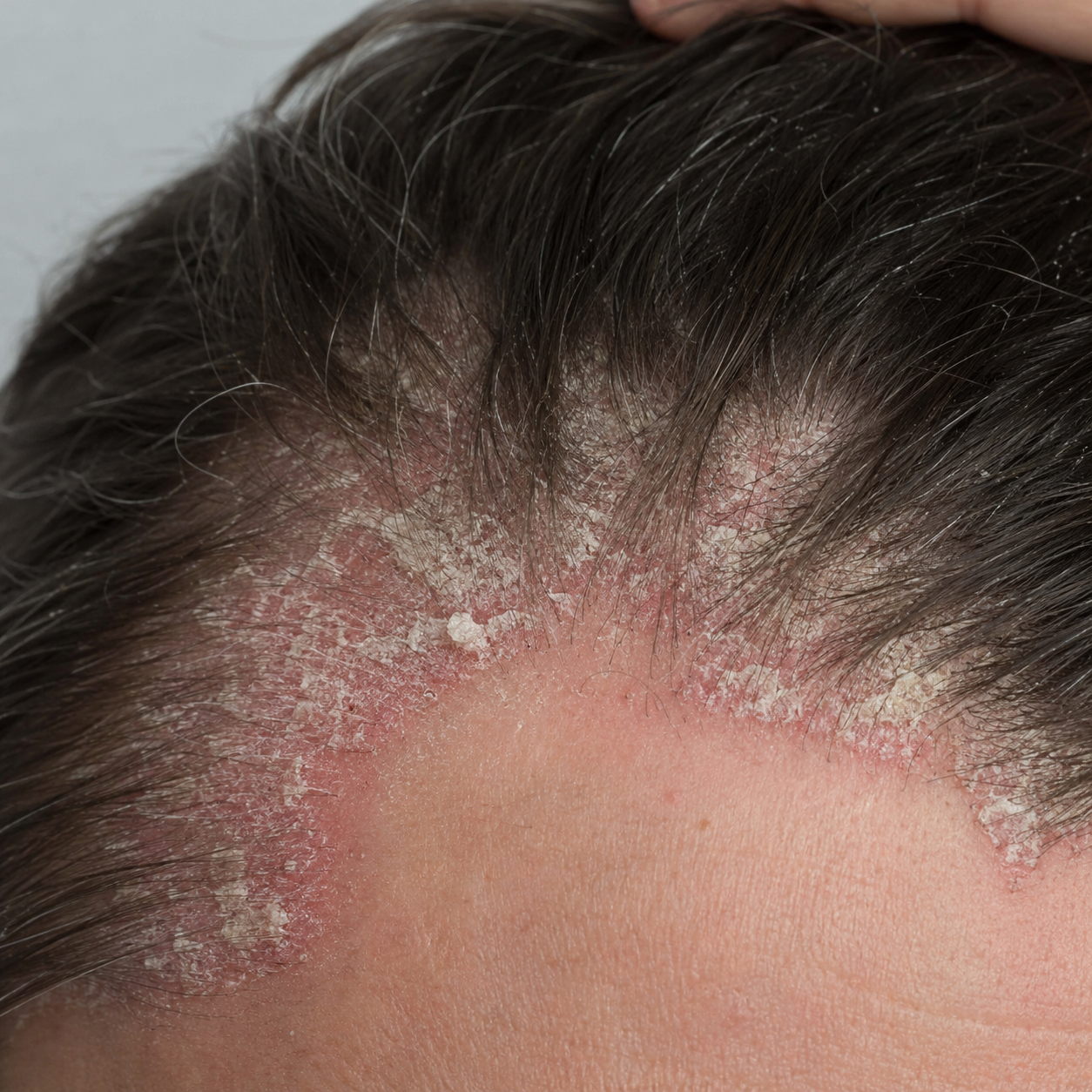
Scalp Psoriasis

Scalp psoriasis can cause thick flakes, itching and scaling on the scalp. It may look like severe dandruff but usually needs psoriasis specific treatment.

Nail Psoriasis

Nail psoriasis may cause nail pitting, thickening, lifting, discolouration or changes in nail shape. It may take longer to improve because nails grow slowly.
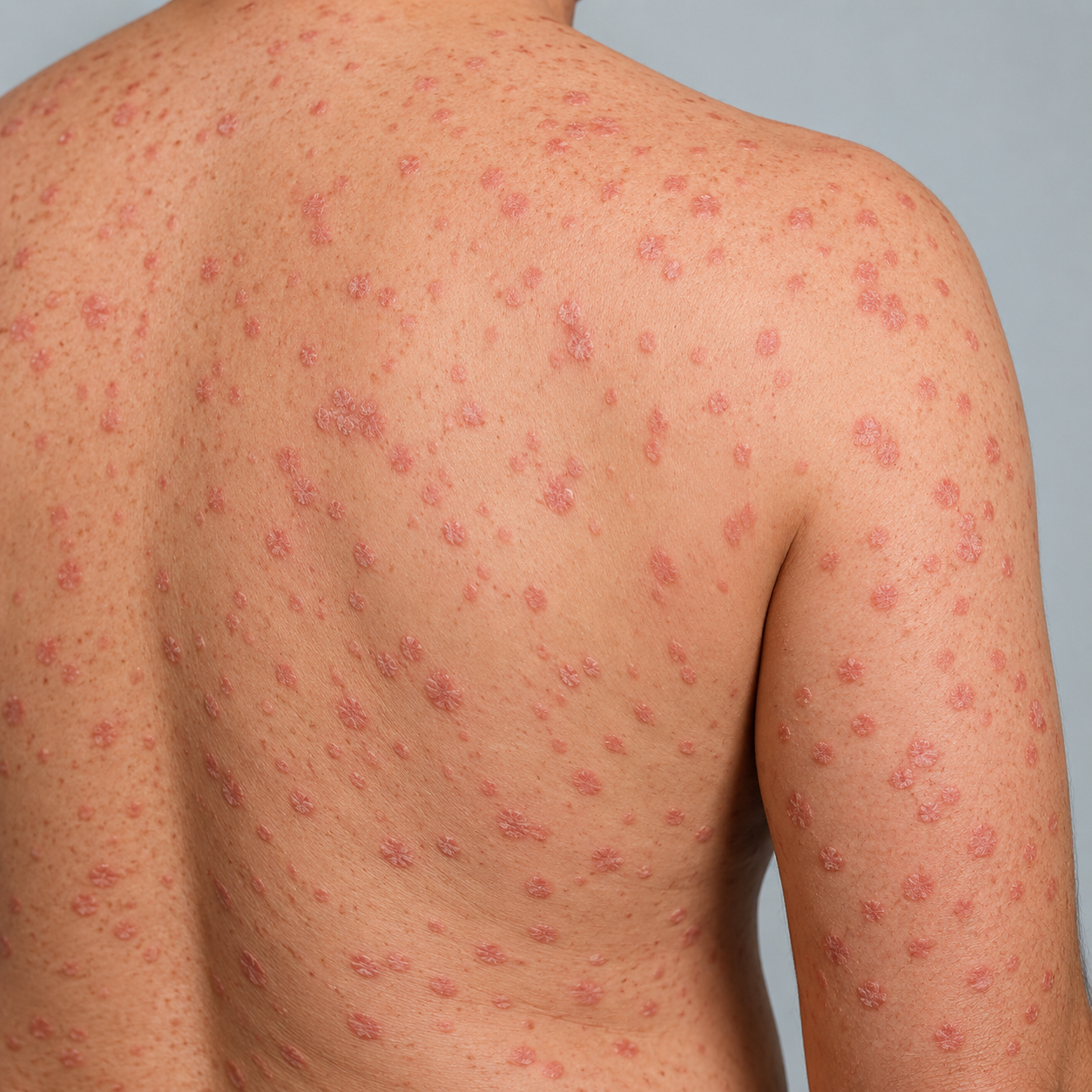
Guttate Psoriasis

Guttate psoriasis appears as small red spots or patches on the skin. It may happen after certain infections, especially in younger patients.
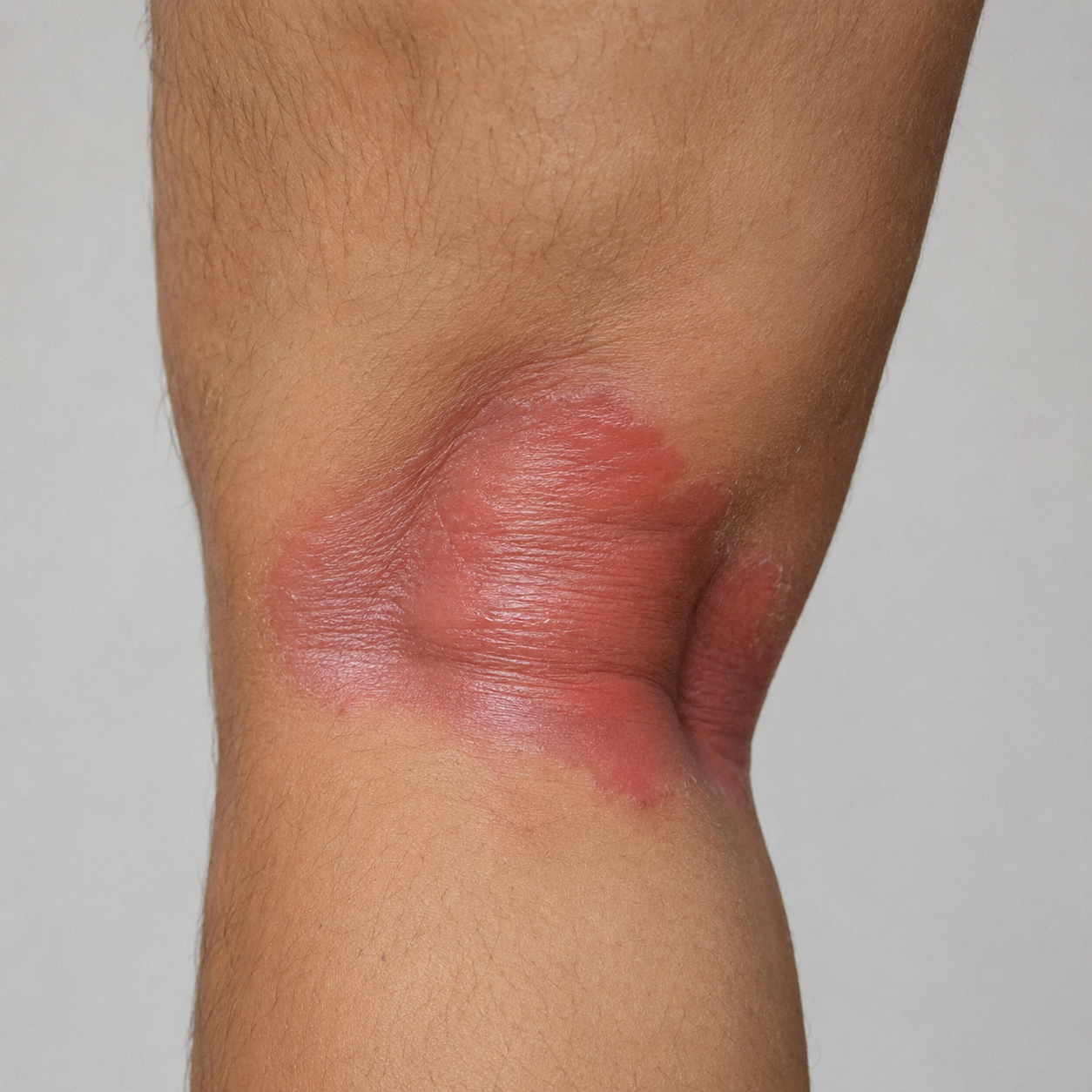
Inverse Psoriasis

Inverse psoriasis affects skin folds such as the underarms, groin, under the breasts or other areas where skin rubs together. It may appear smooth, red and sore instead of thick and scaly.
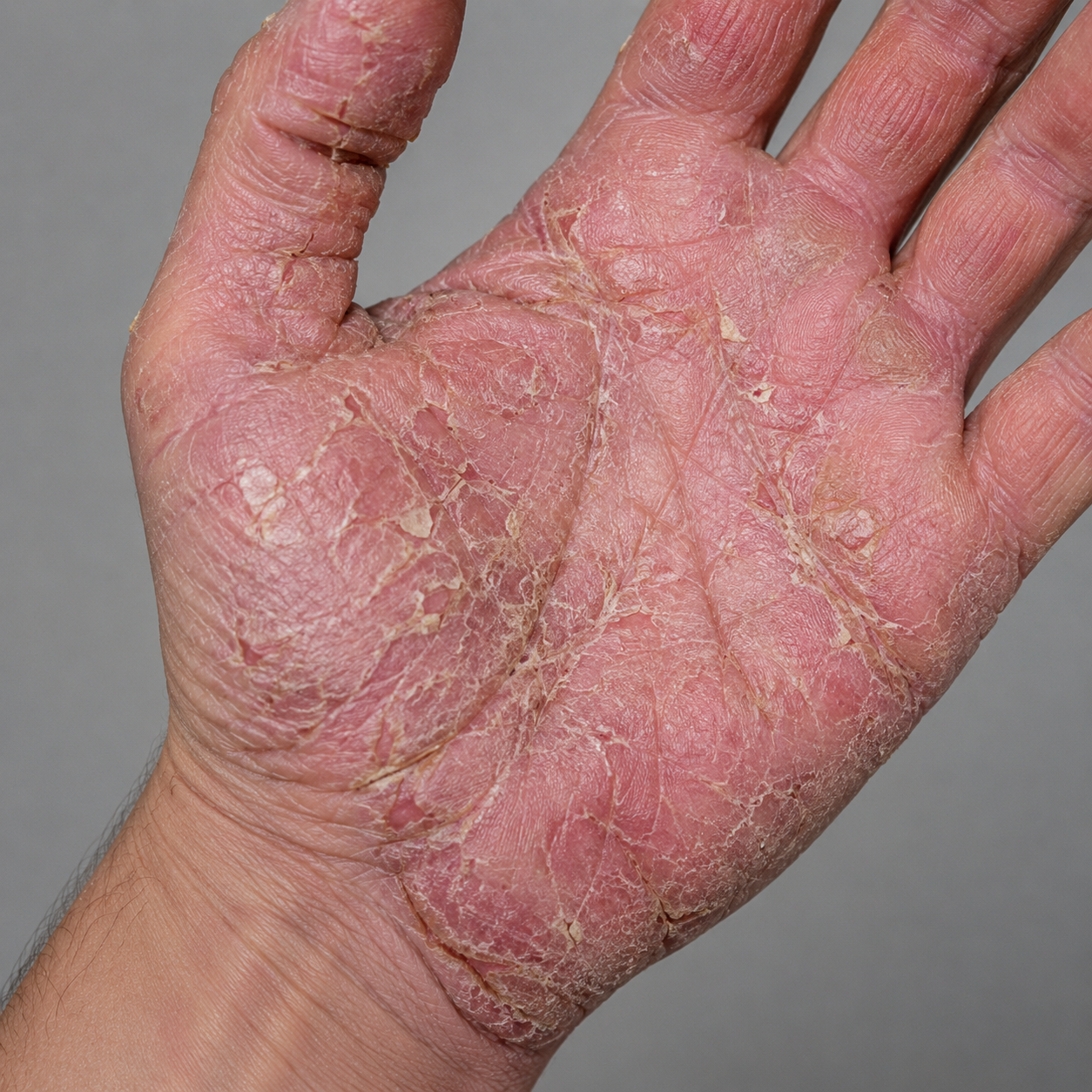
Palmoplantar Psoriasis

Palmoplantar psoriasis affects the palms and soles. It can cause thick scaling, cracking, pain and difficulty with daily activities such as walking or using the hands.

What Causes Eczema and Psoriasis?

Eczema is usually linked to skin barrier weakness, sensitivity, irritation and inflammation, while psoriasis is linked to immune system activity that causes faster skin cell turnover. Both conditions can be influenced by genetics, environment, lifestyle, stress and individual triggers. 

Eczema triggers may vary from person to person. Common triggers include: 

  • Harsh soap or body wash 
  • Detergent and cleaning products 
  • Fragrance in skincare or perfume 
  • Dust mites, pollen or pet dander 
  • Sweat and heat 
  • Dry or changing weather 
  • Stress 
  • Rough fabrics 
  • Frequent hand washing 
  • Unsuitable skincare products 

Psoriasis triggers may also differ between patients. Common triggers include: 

  • Stress 
  • Skin injury, cuts or friction 
  • Infection 
  • Weather changes 
  • Smoking 
  • Alcohol 
  • Certain medication 
  • Lack of sleep 
  • Obesity or metabolic health factors 
  • Stopping medication without medical advice 

When Should You See a Skin Specialist?

You should see a skin specialist if your eczema or psoriasis keeps coming back, spreads, affects sleep, causes pain, bleeds, becomes infected or does not improve with basic creams. Early medical treatment helps reduce discomfort, prevent worsening and avoid unsuitable products that may irritate the skin further. 

Consider booking a consultation if: 

  • Your rash has lasted more than two weeks 
  • Your skin condition keeps returning after temporary improvement 
  • Itching affects your sleep, work or daily activities 
  • Your skin is cracked, painful, bleeding, oozing or crusted 
  • You have thick scales on your scalp, elbows, knees or body 
  • Your skin becomes swollen, warm or infected 
  • You notice nail pitting, nail thickening or nail lifting 
  • You have joint pain, stiffness or swelling together with psoriasis symptoms 
  • Your child has frequent eczema flare ups 
  • You have tried many skincare products but still do not see lasting improvement 

Seek medical attention earlier if you experience rapidly spreading redness, severe pain, pus, fever, widespread skin peeling or sudden worsening of symptoms. 

How Are Eczema and Psoriasis Diagnosed?

Eczema and psoriasis are usually diagnosed through consultation, skin examination and medical history review. Your skin specialist will assess the appearance, location, symptoms, triggers, family history and previous treatments used. In selected cases, further tests may be recommended to rule out infection, allergy or other skin conditions. 

During your consultation, your doctor may ask about: 

  1. When your symptoms started 
  2. Which areas of the body are affected 
  3. Whether your skin feels itchy, painful, burning or sensitive 
  4. How often flare ups happen 
  5. Whether symptoms are linked to skincare, food, weather, work or stress 
  6. Whether there is a family history of eczema, psoriasis, asthma, allergy or autoimmune conditions 
  7. What creams, medication or treatments you have used before 
  8. Whether there are signs of infection 
  9. Whether psoriasis symptoms are linked to joint pain or nail changes 

A professional diagnosis is important because eczema, psoriasis, fungal infection, allergy, seborrhoeic dermatitis and other skin conditions can sometimes look similar. 

What Treatments Do We Provide for Eczema and Psoriasis?

Topical Medication
Oral Medication
Oral Medication
Allergy Test
Supplements
Immunotherapy
1. Topical Medication

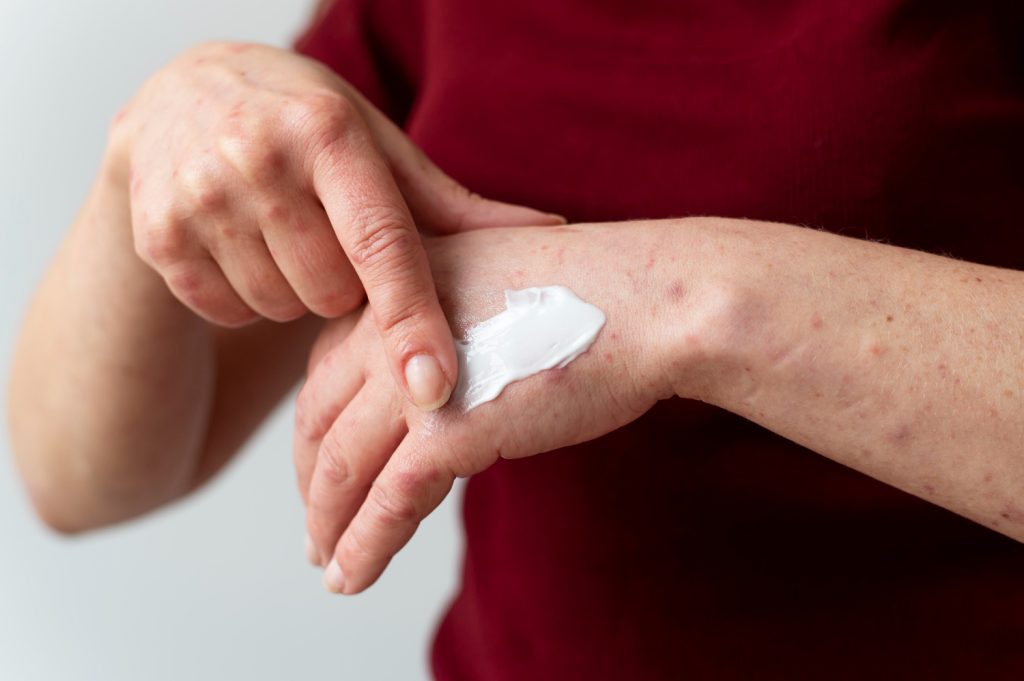
Topical medication is commonly used to reduce redness, itching, inflammation, dryness and scaling. For eczema, it helps calm inflamed and itchy skin. For psoriasis, it helps reduce plaques, scales and inflammation on areas such as the scalp, elbows, knees or body. 

Topical medication may come in different forms, including creams, ointments, lotions, scalp solutions or medicated applications. Your doctor will recommend the suitable type, strength and duration based on your diagnosis, skin sensitivity, affected area and severity. 

This is especially important for sensitive areas such as the face, neck, eyelids, skin folds or children’s skin, where medication should be selected carefully. 

2. Oral Medication

Oral medication may be recommended when eczema or psoriasis is moderate, severe, widespread, recurring or not improving enough with topical treatment alone. It works from within the body to help control inflammation and reduce symptoms that affect comfort, sleep or daily life. 

For eczema, oral medication may be considered when itching, inflammation or flare ups are difficult to control. For psoriasis, oral medication may be considered when plaques are widespread, thick, persistent or affecting quality of life. 

Oral medication should only be taken under medical supervision. Your doctor will assess your health condition, medical history, treatment response and suitability before recommending this option. 

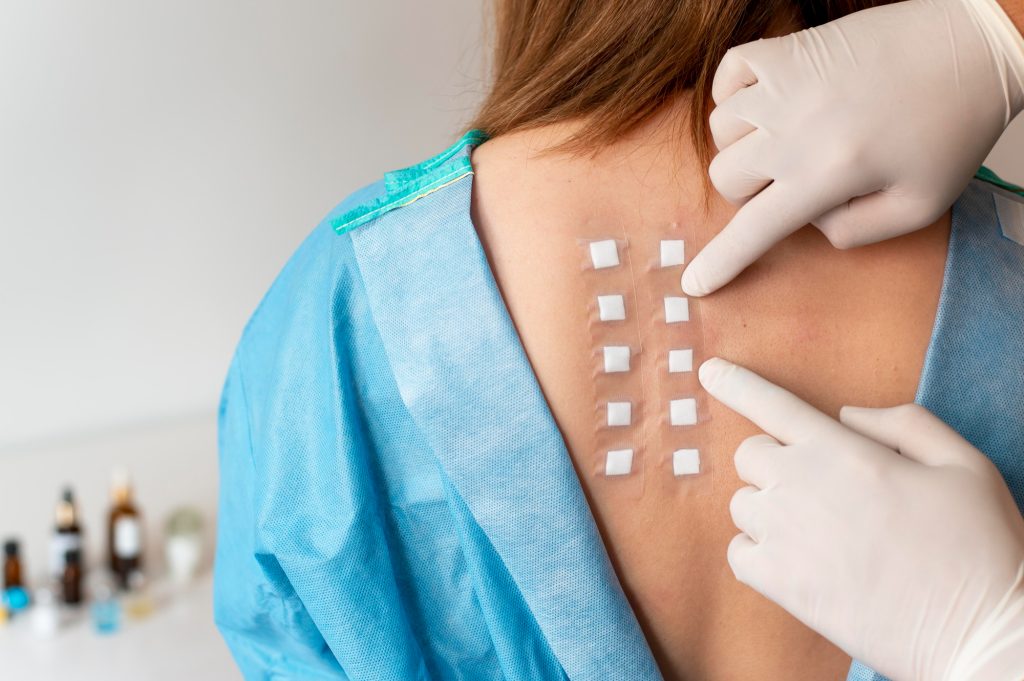
3. Allergy Test

An allergy test may be recommended for selected patients, especially when eczema is recurring, persistent or suspected to be triggered by allergens. Common triggers may include certain foods, dust mites, pollen, pet dander, skincare products, detergents or other environmental factors. 

Allergy testing helps identify possible triggers that may worsen skin inflammation, itching or flare ups. This is especially useful for patients who experience repeated eczema symptoms despite treatment, or when the trigger is unclear. 

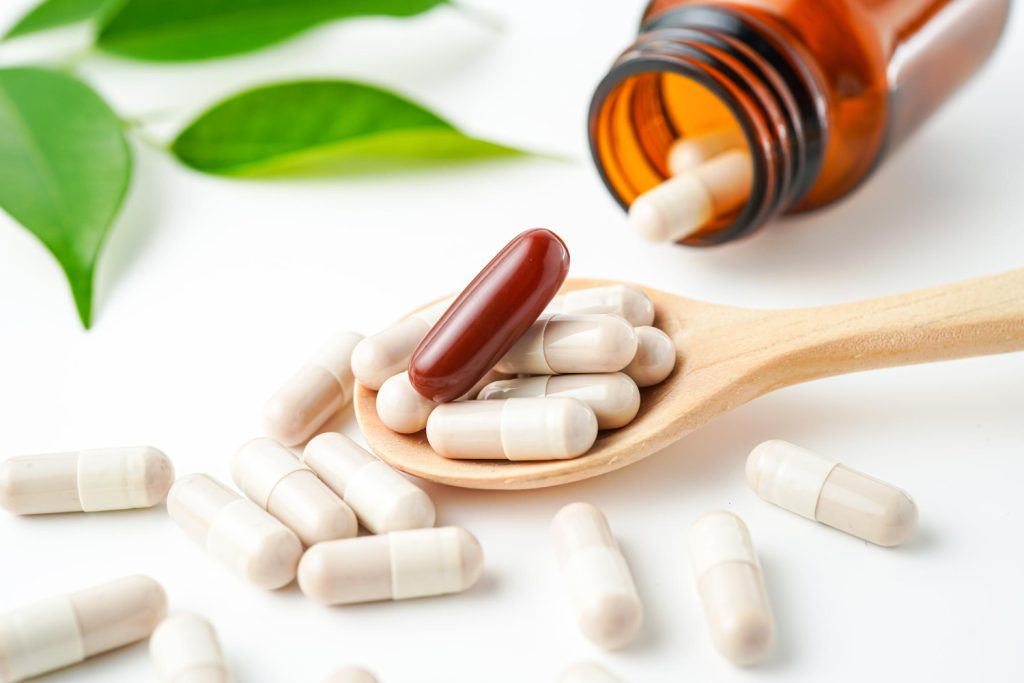
4. Supplements

Supplements may be recommended as supportive care for selected patients, depending on their skin condition and overall health needs. They are not a replacement for medical treatment, but they may be used together with prescribed care to support skin health and general wellbeing. 

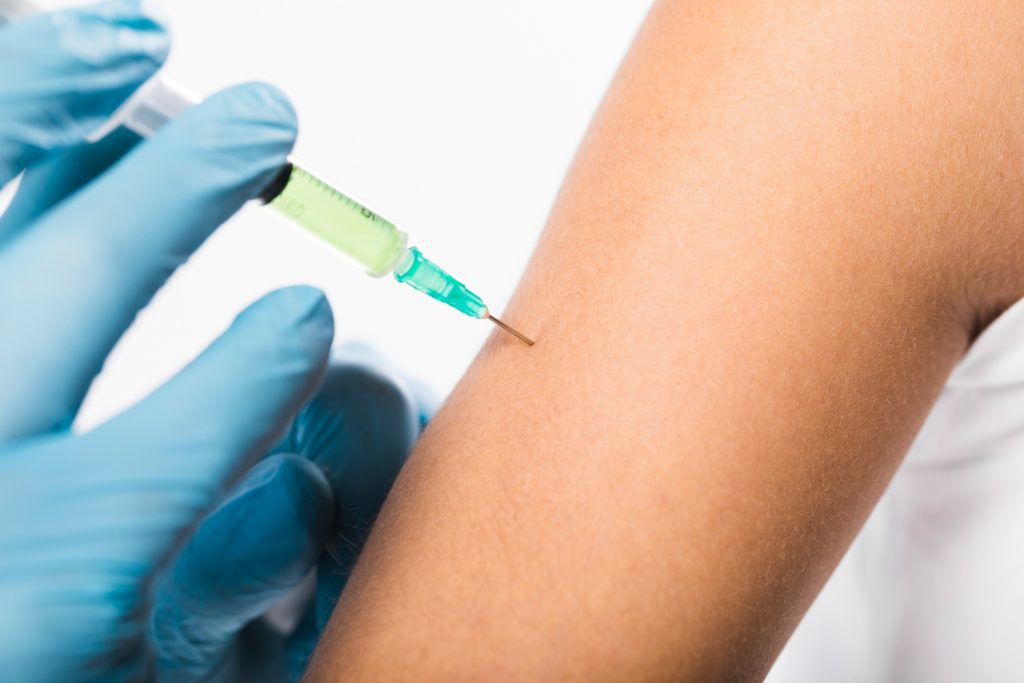
5. Immunotherapy

Immunotherapy may be considered for selected patients with recurring, chronic or more severe inflammatory skin conditions. Since psoriasis is immune related, immune based treatment may be suitable for certain cases. For eczema, it may also be considered in selected persistent cases when conventional treatment is not enough. 

Your doctor will assess your diagnosis, symptoms, severity, medical history and previous treatment response before recommending whether immunotherapy is appropriate. 

Your Eczema and Psoriasis Treatment Journey at Dr. Ko Skin Specialist

Your treatment journey begins with a skin assessment, followed by diagnosis, a personalised treatment plan, active treatment and maintenance care. This process helps your doctor understand your skin condition clearly and recommend suitable treatment based on your symptoms, severity, lifestyle and long term skin needs. 

Step 1: Consultation and Skin Assessment 

Your specialist reviews your medical history, examines your skin and identifies whether your symptoms are more consistent with eczema, psoriasis or another skin condition. You may also be asked about triggers, previous treatments, skincare habits, allergies, family history and lifestyle factors. 

Step 2: Diagnosis and Severity Evaluation 

Your doctor assesses the severity, affected areas, level of inflammation and whether there are signs of infection, thick scaling, nail changes or joint symptoms. This helps determine the safest and most suitable treatment direction. 

Step 3: Personalised Treatment Plan 

You receive a treatment plan based on your diagnosis and skin condition. This may include topical medication, oral medication, allergy test, supplements, immunotherapy or a combination of suitable options. 

Your doctor may also advise you on skincare habits, trigger control and follow up care to support better long term management. 

Step 4: Active Treatment Phase 

During the active treatment phase, the focus is to calm inflammation, reduce itching, improve scaling, treat infection where needed and restore better skin comfort. Your treatment may be adjusted depending on your progress and response. 

Step 5: Maintenance and Flare Prevention 

Once symptoms are under better control, your doctor may recommend maintenance care to reduce future flare ups. This may include a suitable skincare routine, trigger avoidance, follow up appointments and early treatment when symptoms return. 

How Can You Manage Eczema and Psoriasis at Home?

Home care supports medical treatment by reducing irritation, protecting the skin barrier and lowering the chance of flare ups. It should not replace prescribed treatment, but a consistent skincare routine and trigger control can help improve comfort and support better long term management. 

Helpful home care tips include: 

  • Use gentle, fragrance free cleansers 
  • Avoid harsh scrubs, strong exfoliants and irritating skincare products 
  • Moisturise regularly, especially after bathing 
  • Keep baths or showers short and avoid very hot water 
  • Wear breathable clothing, especially in hot and humid weather 
  • Avoid scratching as much as possible 
  • Keep nails short to reduce skin injury 
  • Identify personal triggers such as sweat, stress, detergent, fragrance or weather changes 
  • Follow medication instructions given by your doctor 
  • Do not stop prescribed treatment suddenly without medical advice 
  • Seek help early if the skin becomes infected, painful or rapidly worse 

For eczema, protecting the skin barrier and reducing itch are especially important. For psoriasis, consistent treatment and scale control are important to reduce recurring plaques and discomfort. 

Why Choose Dr. Ko Skin Specialist for Eczema and Psoriasis Treatment?

Dr. Ko Skin Specialist provides professional eczema and psoriasis treatment with personalised care, multiple treatment options and nationwide accessibility. Our team focuses on proper skin assessment, accurate diagnosis and suitable treatment planning to help patients manage recurring skin symptoms more safely and effectively. 

Expertise 

Under the guidance of Dato’ Dr. Ko Chung Beng, Dr. Ko Skin Specialist has built strong experience in dermatology, aesthetic medicine and skin health. Patients are cared for by a professional medical team trained to assess and manage various skin conditions. 

Personalised Care 

Every eczema and psoriasis case is different. Your treatment plan is customised based on your diagnosis, severity, affected area, skin sensitivity, medical history, lifestyle and previous treatment response. 

Comprehensive Treatment Options 

We provide a range of treatment options for eczema and psoriasis, including topical medication, oral medication, allergy test, supplements and immunotherapy where suitable. 

Professional Skin Assessment 

Eczema and psoriasis can sometimes look similar to other skin problems. A professional assessment helps reduce the risk of wrong treatment, delayed recovery or irritation from unsuitable products. 

Nationwide Access 

With over 90 branches across all 13 Malaysian states and Federal Territories, trusted, professional skin care is always close to home, whether you’re in Klang Valley, Penang, Johor, Sabah, Sarawak, or anywhere in between.  


FAQs


  1. What is the best treatment for eczema?

The best treatment for eczema depends on the severity, affected area, age, triggers and whether the skin is infected. Treatment may include topical medication, oral medication, supplements, or immunotherapy for selected cases. A consultation helps determine the most suitable plan.  

  1. What is the best treatment for psoriasis?

The best treatment for psoriasis depends on the type, severity, affected area and treatment response. Mild psoriasis may be managed with topical medication, while moderate to severe cases may require oral medication or immunotherapy. A skin assessment is important before choosing treatment.  

  1. Can eczema be cured permanently?

Eczema is often a long term condition that can improve and flare again. While it may not always be permanently cured, it can usually be managed with proper medical treatment, skincare routine, moisturising care and trigger control. 

  1. Can psoriasis be cured permanently?

Psoriasis is a long term immune related skin condition. Treatment can help reduce plaques, scaling, itching and inflammation, but flare ups may return. Long term management helps improve comfort and reduce recurrence. 

  1. Are eczema and psoriasis contagious?

No. Eczema and psoriasis are not contagious. You cannot catch them from touching, sharing food, using the same household items or being near someone with the condition. 

  1. How do I know whether I have eczema or psoriasis?

Eczema often causes very itchy, dry, inflamed and sensitive skin. Psoriasis often causes thicker raised plaques with white or silvery scales. However, both conditions can look similar, so a skin specialist assessment is recommended for accurate diagnosis. 

  1. Can supplements cure eczema or psoriasis?

Supplements do not cure eczema or psoriasis. They may be recommended as supportive care for selected patients, depending on skin condition and overall health needs. Medical treatment is still important for controlling inflammation, itching, scaling and flare ups. 

  1. What is immunotherapy for eczema and psoriasis?

Immunotherapy refers to treatment that targets immune-related inflammation. It may be considered for selected patients with recurring, chronic or more severe inflammatory skin conditions. Suitability depends on diagnosis, severity, medical history and previous treatment response. 

  1. Can children receive eczema treatment?

Yes. Children with eczema can receive treatment, but medication type, strength and duration must be selected carefully. A medical consultation is important if the child scratches frequently, sleeps poorly, has infected skin or experiences repeated flare ups. 

  1. How much does eczema and psoriasis treatment cost in Malaysia?

Eczema and psoriasis treatment in Malaysia may start from around RM100 and can go up to a few hundred ringgit or more per visit, depending on the consultation, medication, treatment type and severity. At Dr. Ko Skin Specialist, the final cost depends on your diagnosis and recommended treatment plan, so a consultation is advised for clearer pricing.Â